Tell us about the job
Takes about a minute. No obligation.
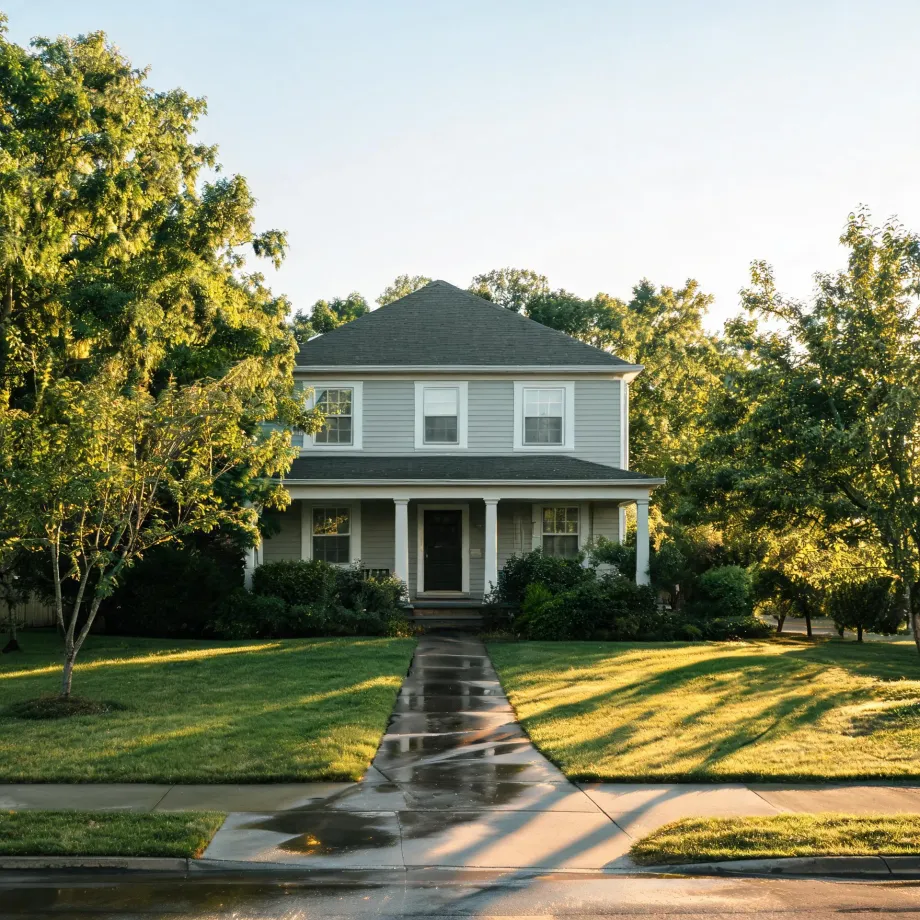
A compressor that sits unused through the entire calendar carries its own failure pattern. Seals dry out. Refrigerant migrates through an idle system. When a homeowner finally calls for cooling and the unit does not respond, the contractor is not unwinding seasons of hard use. Homes in Caledonia County, VT have essentially no cooling season — no month of the year is warm enough to call for it. A contractor diagnosing a failed contactor or a seized compressor here has to rule out what long dormancy did to it before pricing the repair, because the equipment has had no runtime to hide a slow decline.
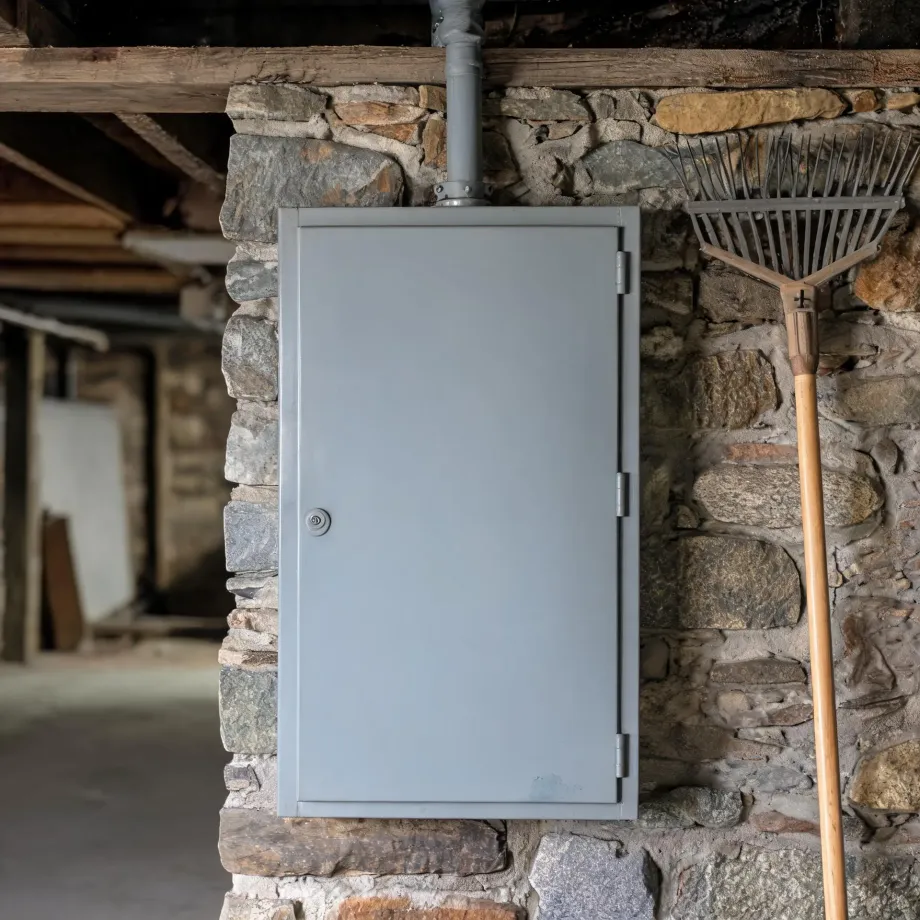
Ductwork in a house built for an earlier generation of equipment carries the record of every adaptation made since, and what a contractor finds once a unit is open depends entirely on that history. Half the homes in Caledonia County, Vermont were built in 1973 or earlier (2020-2024 ACS 5-year). A system that has been running in adapted infrastructure long enough will show wear patterns a parts lookup does not predict, and components that failed may have no direct replacement still in production. The repair scope gets settled by what the opened equipment actually contains, not by what the service call looked like at the door.
The Parts of a Central AC a Contractor Checks First
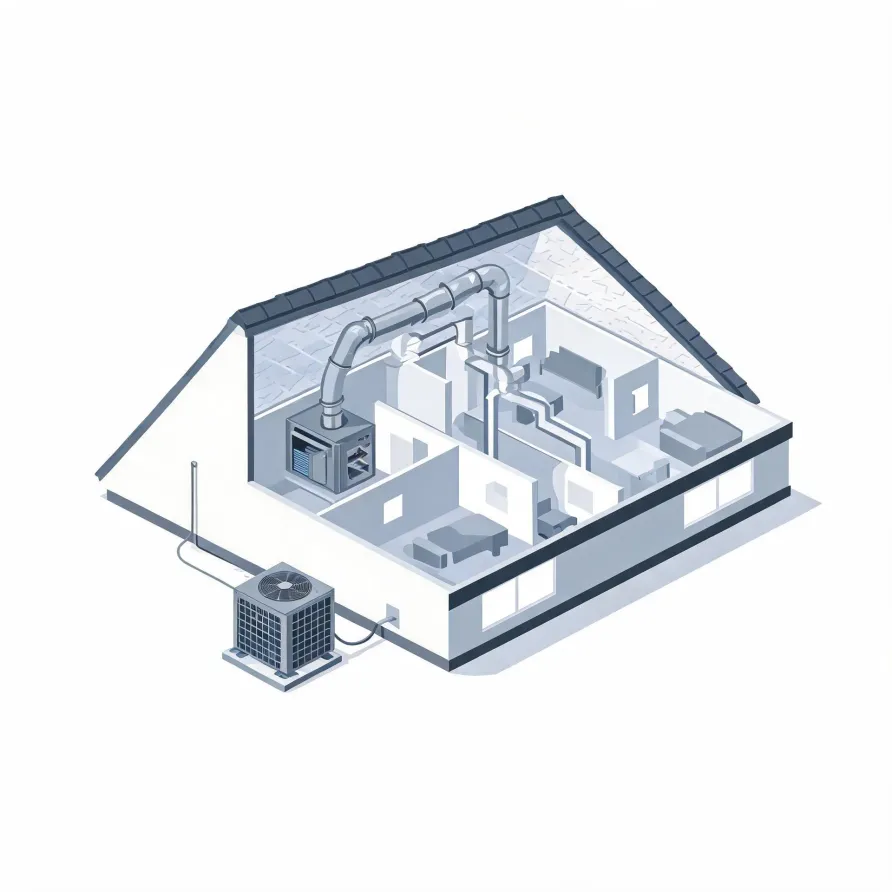
The outdoor condenser unit sits outside the house and carries the compressor and condenser coil. These are where a contractor starts when a system stops cooling properly. A failed compressor or a fouled coil are among the first things a technician will rule in or out.
Inside the house, the air handler holds the evaporator coil and the blower that moves air across it. The refrigerant line set runs between the two units, and the thermostat tells the whole system when to run. Any of these can be the source of a problem, and a contractor will work through them to find it.
The drawing shows the general layout of a central AC system, and a licensed contractor determines what applies to your specific house.
Find a contractor in Caledonia CountyCaledonia County, by the numbers
92 severe weather events were recorded in Caledonia County, Vermont between 2015 and 2024.
NOAA National Centers for Environmental Information, Storm Events Database, bulk CSV export, events 2015-01-01 through 2024-12-31.Half the homes in Caledonia County, Vermont were built in 1973 or earlier (2020-2024 ACS 5-year).
U.S. Census Bureau, 2020-2024 American Community Survey 5-Year EstimatesCaledonia County, Vermont holds 16,164 housing units (2020-2024 ACS 5-year).
U.S. Census Bureau, 2020-2024 American Community Survey 5-Year EstimatesOwners occupy 79.2% of the occupied homes in Caledonia County, Vermont (2020-2024 ACS 5-year).
U.S. Census Bureau, 2020-2024 American Community Survey 5-Year EstimatesCodes & Standards Governing Central AC Repair in Caledonia County, Vermont10 sourced rules and standards
What HVAC Repair Looks Like in Caledonia County
Split-system central air conditioners rated below 45,000 Btu/h manufactured on or after January 1, 2023 must meet a federal minimum of 13.4 SEER2.
Split-system central air conditioners rated at or above 45,000 Btu/h manufactured on or after January 1, 2023 must meet a federal minimum of 13.4 SEER2.
Split-system central air conditioners manufactured between January 1, 2015 and December 31, 2022 had to meet 13 SEER, the metric that preceded SEER2.
Single-package central air conditioners manufactured on or after January 1, 2023 must meet a federal minimum of 13.4 SEER2.
Space-constrained central air conditioners manufactured on or after January 1, 2023 must meet a federal minimum of 11.7 SEER2.
Federal efficiency standards for split-system central air conditioners and heat pumps are set on each certified combination of outdoor unit and indoor coil rather than on the outdoor unit alone.
Residential and light commercial air conditioning and heat pump systems assembled in the field, including mini-splits and unitary systems, may not be installed on or after January 1, 2025 using a refrigerant with a global warming potential above 700.
A field-assembled system whose specified components were all manufactured or imported before January 1, 2025 carries no installation compliance date under the refrigerant restrictions and may still be installed.
Licensing Rules for HVAC Repair in Caledonia County, Vermont
Vermont splits the trade across two specialty licences and a contractor may hold one without the other: field A1 covers automatic gas or oil heating including geo-thermal and ground source heat pumps, and field C3 covers refrigeration or air conditioning including air-to-air heat pumps.
Vermont reaches HVAC work through its electricians’ licence rather than an HVAC licence, and the requirement stops at the front door of a house: anyone performing electrical work in Vermont must be licensed as an electrician unless the work is in a residential building containing two or fewer dwelling units.
Severe Weather Events in Caledonia County
Extreme weather puts real stress on central AC systems, and the repair load that follows is shaped by what the local climate actually does. That makes this a county-level question, not a general one.
92 severe weather events, 2015–2024. Source: NOAA National Centers for Environmental Information, Storm Events Database.