Tell us about the job
Takes about a minute. No obligation.
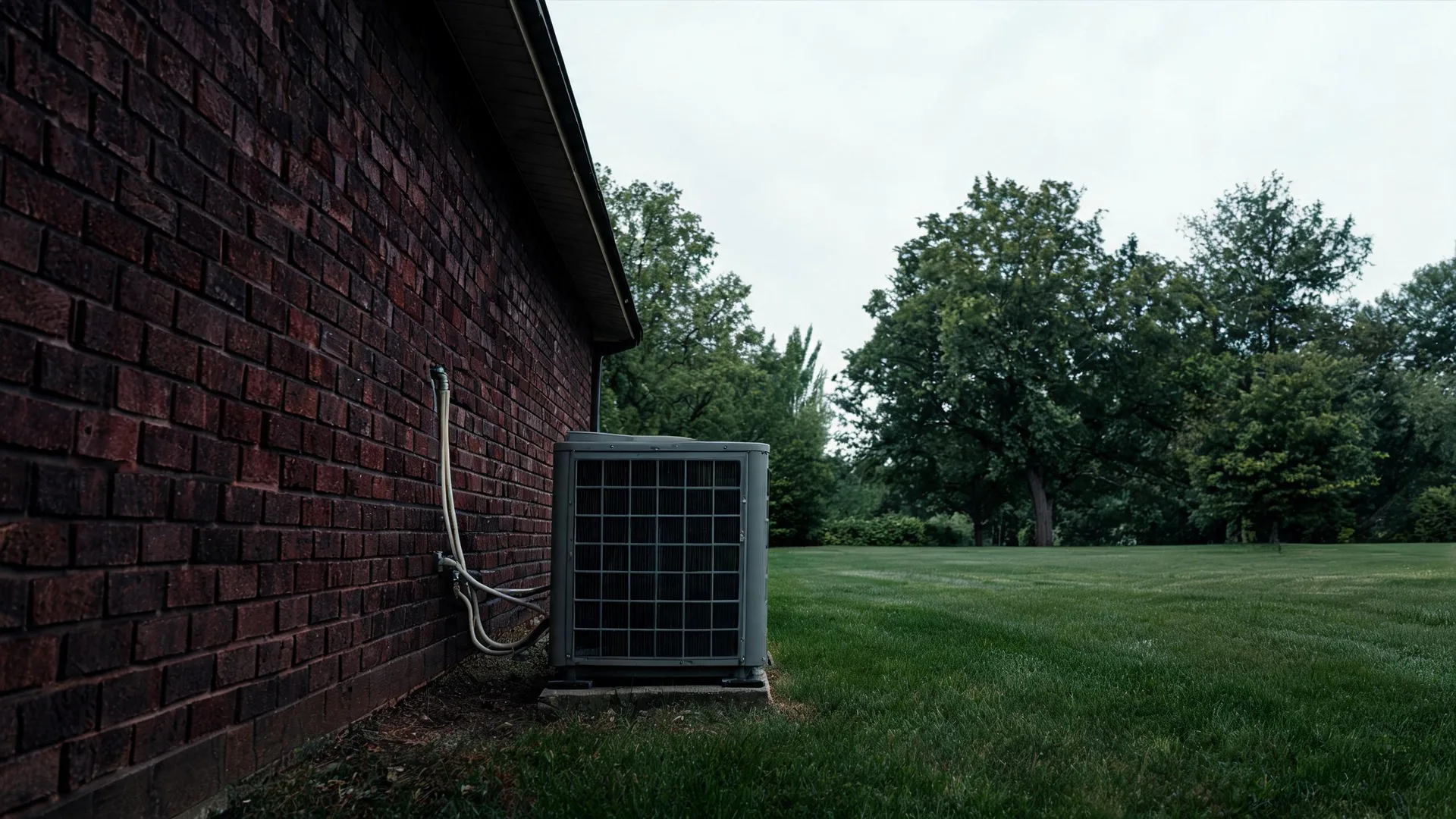
A central AC compressor in Washington County spends its life waiting. Homes in Washington County, VT have essentially no cooling season — no month of the year is warm enough to call for it. Refrigerant migrates when a system sits off for long stretches, seals dry out, and contactor points corrode without the cycling that would otherwise keep them clean. When a homeowner finally switches the unit on and it does not respond, the fault is usually in those standing components rather than in anything the compressor worked to death. A contractor here opens the electrical side and the refrigerant circuit with that history in mind.
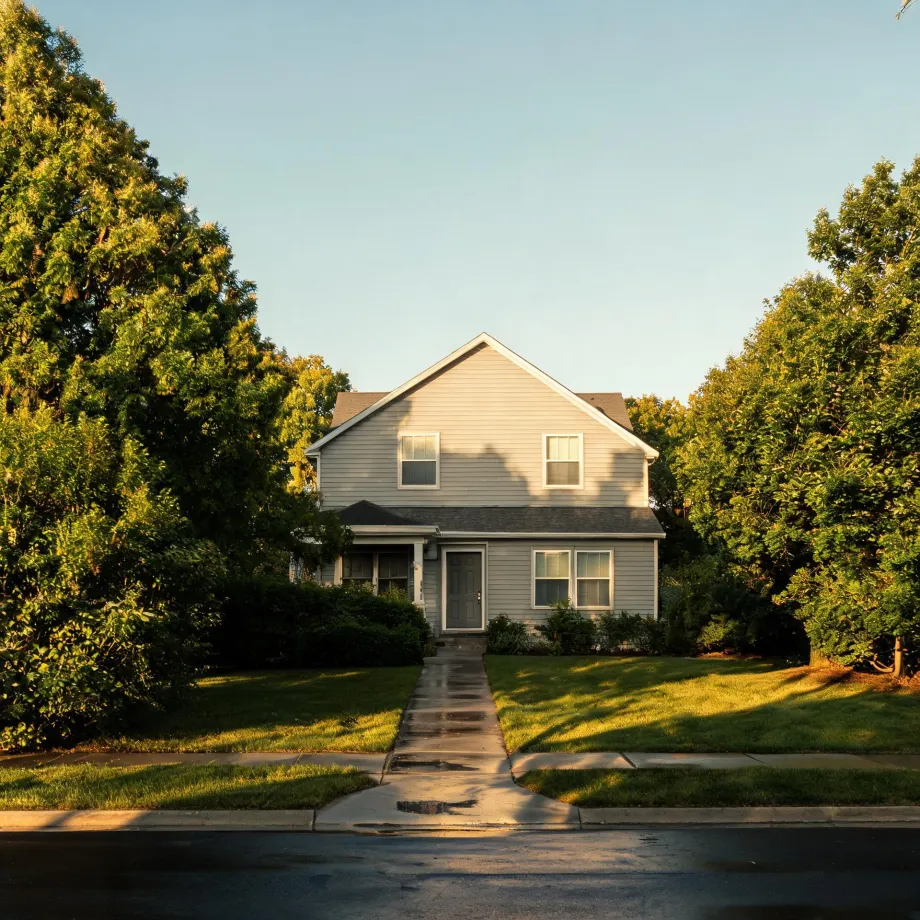
Ductwork laid into a house generations before the current system arrived was sized and routed for something that is no longer there. When a refrigerant circuit or a blower assembly fails in stock like this, what the opened unit actually contains often decides whether the repair is a parts order or a deeper conversation about what is available. Half the homes in Washington County, Vermont were built in 1973 or earlier (2020-2024 ACS 5-year). A contractor opening a condenser or an air handler here checks whether the components inside it still have a supply chain, because systems retrofitted into older houses have often run longer on parts that were already aging when they went in.
The Parts of a Central AC a Contractor Checks During a Repair
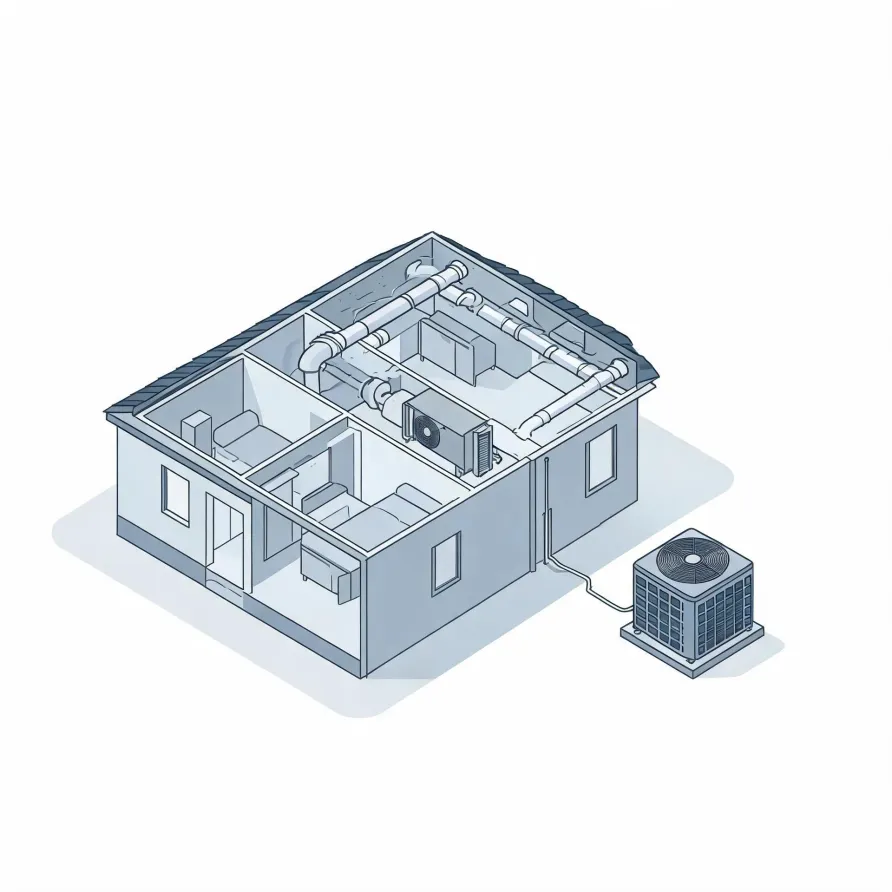
The outdoor condenser unit sits on a pad beside the house and holds the compressor, the condenser coil, and the fan that pushes heat out. When the system blows warm air or shuts off unexpectedly, a contractor starts here. The compressor and coil are the most common sources of a breakdown.
Inside the house, the air handler or furnace cabinet holds the evaporator coil and the blower. The evaporator coil is where the cold side of the system lives, and a frozen coil or a failing blower shows up as weak airflow or ice on the unit. The two units talk through a pair of refrigerant lines that run between them, and those lines, along with the thermostat that tells the whole system when to run, are part of what a contractor traces when the problem is not obvious at first look.
The drawing shows a typical layout, and a licensed contractor determines what applies to your specific system and house.
Find a contractor in Washington CountyWashington County, Vermont, by the numbers
113 severe weather events were recorded in Washington County, Vermont between 2015 and 2024.
NOAA National Centers for Environmental Information, Storm Events Database, bulk CSV export, events 2015-01-01 through 2024-12-31.Half the homes in Washington County, Vermont were built in 1973 or earlier (2020-2024 ACS 5-year).
U.S. Census Bureau, 2020-2024 American Community Survey 5-Year EstimatesWashington County, Vermont holds 31,004 housing units (2020-2024 ACS 5-year).
U.S. Census Bureau, 2020-2024 American Community Survey 5-Year EstimatesOwners occupy 73.7% of the occupied homes in Washington County, Vermont (2020-2024 ACS 5-year).
U.S. Census Bureau, 2020-2024 American Community Survey 5-Year EstimatesCodes & Standards Governing Central AC Repair in Washington County, Vermont10 sourced rules and standards
What HVAC Repair Looks Like in Washington County
Split-system central air conditioners rated below 45,000 Btu/h manufactured on or after January 1, 2023 must meet a federal minimum of 13.4 SEER2.
Split-system central air conditioners rated at or above 45,000 Btu/h manufactured on or after January 1, 2023 must meet a federal minimum of 13.4 SEER2.
Split-system central air conditioners manufactured between January 1, 2015 and December 31, 2022 had to meet 13 SEER, the metric that preceded SEER2.
Single-package central air conditioners manufactured on or after January 1, 2023 must meet a federal minimum of 13.4 SEER2.
Space-constrained central air conditioners manufactured on or after January 1, 2023 must meet a federal minimum of 11.7 SEER2.
Federal efficiency standards for split-system central air conditioners and heat pumps are set on each certified combination of outdoor unit and indoor coil rather than on the outdoor unit alone.
Residential and light commercial air conditioning and heat pump systems assembled in the field, including mini-splits and unitary systems, may not be installed on or after January 1, 2025 using a refrigerant with a global warming potential above 700.
A field-assembled system whose specified components were all manufactured or imported before January 1, 2025 carries no installation compliance date under the refrigerant restrictions and may still be installed.
Licensing and Legal Requirements in Washington County, Vermont
Vermont splits the trade across two specialty licences and a contractor may hold one without the other: field A1 covers automatic gas or oil heating including geo-thermal and ground source heat pumps, and field C3 covers refrigeration or air conditioning including air-to-air heat pumps.
Vermont reaches HVAC work through its electricians’ licence rather than an HVAC licence, and the requirement stops at the front door of a house: anyone performing electrical work in Vermont must be licensed as an electrician unless the work is in a residential building containing two or fewer dwelling units.
Severe Weather Events in Washington County
Weather puts real hours on heating and cooling equipment. The more a system cycles hard to hold temperature through extreme conditions, the sooner its components need attention, which is why local weather history matters when you're talking about AC repair in Washington County.
113 severe weather events, 2015–2024. Source: NOAA National Centers for Environmental Information, Storm Events Database.